

I often get asked about things to do in Porto, especially its ‘must sees’. In my experience, this intriguing city has such a lot to offer that it’s hard to narrow down the selection.
It’s a city whose architecture spans millennia with traces of Roman dwellings, plenty of medieval houses and monuments as well as Baroque buildings, Art Nouveau, Art Deco and innovative contemporary designs.
With port wine, the Douro river, its many tourist attractions and overall character, Porto has unsurprisingly become one of the top-rated European cities to visit. It was recently awarded Europe’s Leading City Break Destination 2023 in the World Travel Awards.
Top Picks For The Best Things To Do In Porto
See the highlights of Porto on this private walking tour. LEARN MORE
Explore on foot with my self-guided walking tour of Porto. LEARN MORE
Listen to authentic Fado. LEARN MORE
Get a taste for Porto on this food tour. LEARN MORE
If you are trying to fit as much as possible into limited time, I’ve created a self-guided walking tour of Porto’s highlights that’s flexible enough to do in just one day or to split over two days and gives you a well-rounded selection of what to do in Porto.
Note: If you’d prefer to visit Porto as part of a fully managed itinerary that includes guided tours of Porto, take a look at these core Portugal itineraries that I’ve designed.
Tip: When shopping keep a look out for Tax Free signs. If you’re a non-EU resident you can claim back a big chunk of tax on goods bought. To find out how, take a look at my Tax free shopping in Portugal for Non-EU Residents post.
Read on for a summary of key Porto attractions that you may wish to include in your trip plans.
1. Explore the Ribeira
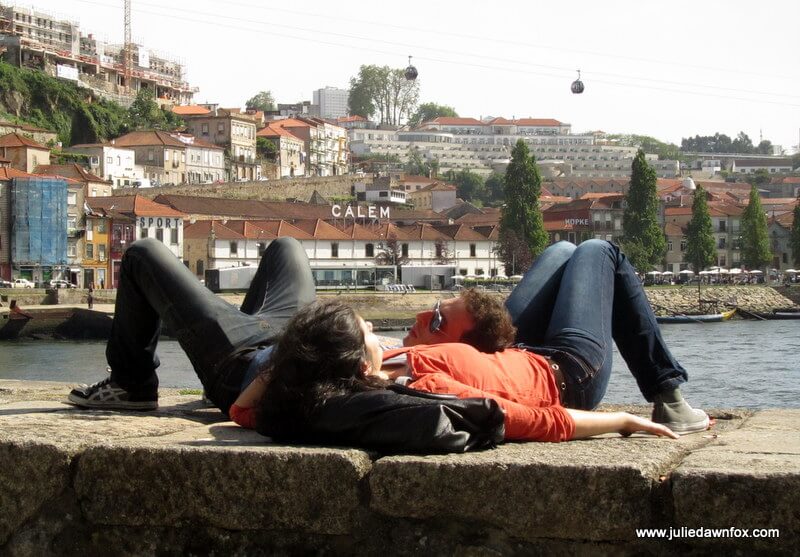
One of the most beautiful and liveliest districts in Porto’s historic centre and a UNESCO World Heritage neighbourhood. Situated on the riverbank of the Douro river, it’s one of the most genuine and charming parts of the city in the heart of the old town.
Here you’ll find loads of restaurants as you head towards the bridge. Both tourists and locals enjoy eating in this area and you should be able to have a reasonable, well-priced meal. Just check the menu prices before you decide.
2. Marvel at the iconic Dom Luís I Bridge

Spanning the River Douro to link the port wine houses of Vila Nova de Gaia with the dynamic downtown Ribeira district of Porto, is the two-tier Dom Luís I Bridge. At the time of its construction between 1881 and 1886, its span of 172 metres was the longest of its type in the world.
Pedestrians and normal traffic runs along the lower tier but if you’d like amazing views you can take the platform on the upper deck. Just watch out for the metro!
3. Visit the São Bento railway station

Some of Portugal’s most impressive azulejo panels (hand painted tiles) are proudly on display on the interior and exterior of Porto’s buildings.
São Bento train station is one of the top places to see in Porto and has to be on your itinerary, even if you’re not using it to travel anywhere. In the early 20th century, the walls of the entrance hall were clad with over 20,000 azulejos painted with scenes of significant moments from Portugal’s rich history.
You can visit the station as part of this 3-Hour Guided Walking Tour. Or, if you don’t like being part of a group, this Highlights and Hidden Gems of Porto Private City Walking Tour may be more suitable.
4. Take in the views at the Serra do Pilar Monastery

Serra do Pilar Monastery is one of my favourite Porto monuments. It has a unique circular church and cloisters and an intriguing connection with the military that makes it well worth paying the small entrance fee to discover. Its hilltop location offers incredible views of the river, the colourful jumble of buildings in the riverside Ribeira district and the rows of port wine cellars in Vila Nova de Gaia.
Even if you can’t go inside, the views from the terrace outside the church are impressive.
The monastery is temporarily closed for renovations but normally opens Tuesday to Sunday from 10 am to 6:30 pm. Closed Mondays.
Tickets: Cloister and exhibitions: €2.
If you’d like more great tips on my favourite viewpoints, check out my Where To Find The Best Views In Porto post.
5. Wonder at the exquisite Palacio da Bolsa

The Palácio da Bolsa is far more impressive inside than out. It was built in the 19th century as the city’s Stock Exchange and never a finer temple to finance has there been, I’m sure. The interior architectural features, which you will learn about on the guided tour, are exquisitely and skillfully executed. The golden Arab Room certainly has the wow factor.
The Palace is open every day from 9:30 am to 1 pm and 2 pm to 5:30 pm. Tickets cost €12.
Buy tickets in advance to visit Palacio da Bolsa with a certified guide
6. Visit Jardins do Palácio de Cristal

My first of my favourite gardens in Porto are the Jardins do Palácio Cristal (Crystal Palace Gardens). They don’t look like much until you get around the other side of the domed Rosa Mota Pavilion (aka Super Bock Arena).
Once there, you’ll be able to explore various terraces, sculptures and ponds while admiring the views across the Douro River.
Wondering about the best ways to get around the city? Check out my How To Get Around Porto Using Tours And Public Transport post.
7. Step into another world at Livraria Lello

Livraria Lello is often referred to as one of the most beautiful bookstores in the world. With its forked swirl of a staircase, stained glass window and general sense of awe as you walk in, it’s become a ‘must-see’ in Porto.
J.K. Rowling is said to have been inspired by Lello when writing Harry Potter, which has increased its popularity. Queues can be long and you need to buy an admission ticket, the cost of which (€5) is redeemed when you purchase a book. If you’re in a hurry, consider buying a priority ticket (€15.90), which includes a book and allows you to skip to the front of the queue.
The bookstore is open every day from 9:30 am to 7 pm. You can buy your ticket to Lello here.
Alternatively, you could combine things on this 3-Hour Walking City Tour & Lello Bookstore Visit.
8. See golden splendour at Church of São Francisco
Igreja de São Francisco is very close to Palácio da Bolsa and is an extreme example of gold decor, a far cry from the original Franciscan simplicity of the church. The catacombs are a chilling place to escape from the summer heat or a rainy day.
Open every day. November to February: 9 am to 5:30 pm. March to October: 9 am to 7 pm. July to September: 9 am to 8 pm. Admission is €7.50.
9. Take in the views at Clérigos Church and Tower

The Baroque-styled Clérigos Church, topped by a tower, was built between 1735 and 1748. If you can manage the 240 steps leading up the 75 metres tall tower, you’ll be guaranteed superb views.
If you’re interested, mass is celebrated in English every Saturday at 5 pm.
I highly recommend a Night Pass (from 7 pm to 11 pm) where you can see a very different view of Porto.
Open every day from 9 am to 7 pm. Admission to the church is free but for the tower and museum it is €8 and for the Night Pass €5.
Buy your entrance ticket to the Torre dos Clérigos.
10. See the beautiful tiles at Igreja do Carmo

The Church of Carmo is famous for its azulejo-covered exterior representing scenes of the founding of the Carmelite Order.
It’s also well-known for Porto’s narrowest house, the “Casa Escondida”, which means Hidden House. When the church was built in the second half of the 18th century, it was on a plot of land next to another church, Igreja dos Carmelitas. The construction of two churches together was not allowed at that time so the Casa Escondida was built between them, separating the two churches. It is only 1.5 metres wide.
Igreja do Carmo is open Monday to Friday from 9 am to 12 pm and 2 pm to 6 pm.
For Mass times, check out this Facebook page.
11. Listen to the music at Casa da Guitarra
If you spend just a short amount of time in Porto, you’ll quickly realise the important role music plays in people’s lives, particularly the genre of Fado. Casa da Guitarra, or ‘House of Guitar’ is the place to see, and hear, the many different stringed instruments inherent in much of Portuguese music.
You can buy an instrument (or just a pick!) or enjoy an hour-long concert in an intimate setting which includes a glass of port wine.
See Casa da Guitarra website for up coming events.
12. Feel like a local at Mercado do Bolhão

This once shabby looking historic market had a long awaited revamp in 2022 and the splendour of the exterior now mirrors what you’ll see inside. A few years ago, it may not have made many people’s ‘what to see in Porto’ list, but that has now changed.
There you’ll find the essence of the city, where locals go to buy their fruit, veg, meat and suchlike, all making a stunning display of colour. Just wander around and take in its bustling atmosphere or tuck in at one of its restaurants.
Bolhão market is open Monday to Friday from 8 am to 8 pm and Saturday from 8 am to 6 pm. Closed Sundays.
13. More than a market -Mercado do Bom Successo
The Mercado do Bom Successo is a vibrant, sleek food hall, (which incorporates a hotel and offices), offering a huge range of stalls selling food and drink from Portugal and beyond and very popular with locals and tourists.
The market is open Monday to Thursday from 8 am to 11 pm, Friday and Saturday from 8 am to 12 am, and Sunday from 8 am to 11 pm. For details of Store and Restaurant opening times, see Mercado do Bom Successo website.
14. Go for gold at the Church of Santa Clara

Yet another gold-clad church is the astounding Igreja de Santa Clara. Dating from the first half of the 15th century, you’ll find one of the best examples of the art of gilded woodcarving anywhere.
The church is open every day from 9 am to 1 pm. It re-opens at 2 pm but closing times vary due to religious ceremonies. Admission is €4.
15. Experience the heartfelt sounds of Fado
There seems to be endless places to see and hear fado in Porto. The connection between the musicians and the audience is paramount and you’ll see lots of posters from fado concerts saying that fado is ‘happening’ at their place.
You can meet a collective of professional Fado artists who share a passion for traditional Fado, talk with the musicians and listen to them perform, at this unique daily Fado concert.
16. See art, architecture and grounds at Serralves

The best known of the two major art galleries in Porto is the Serralves Contemporary Art Museum. The grounds are as interesting as the regularly changing exhibitions in the main galleries, one of which is in an Art Deco house, the other in a sleek modern building.
There’s a treetop walk for the adventurous and during the summer months, you can visit Serralves at Night for a light show.
Buy your Serralves Foundation Entry Ticket, which includes the park and treetop walk.
Note: You need to allow half a day to get to and make the most of visiting Serralves so unless you have at least 2 days in Porto or a strong interest in what Serralves has to offer, you may want to focus on more central sights.
Up-coming events can be found on the Serralves Museum website. A general ticket that covers all amenities costs €20, although partial tickets can also be purchased.
For the months October to March, the museum is open Monday to Friday from 10 am to 6 pm, Saturday, Sunday and Holidays from 10 am to 7 pm. April to September, open every day from 10 am to 7 pm.
17. See art in an 18th century palace at Soares dos Reis National Museum
Closer to the city centre, the Soares dos Reis Museum is named after an extremely talented sculptor who studied here when the building, a former palace, was the School of Fine Arts. As well as some of his finest marble sculptures, the museum has a wide range of paintings, furniture, glassware and ceramics and can easily take up 2 hours of your time.
Opening times are Wednesday to Sunday from 10 am to 6 pm and Tuesday from 2 pm to 6 pm. Closed Mondays. Admission: €5.
18. Explore the cloisters at Porto Cathedral

Porto Cathedral features Romanesque, Gothic and Baroque styles although you only see the full range of these if you pay €3 to enter the cloisters. It’s worth it, in my opinion, just to see the Gothic cloisters and the tiled panels, although it contains other treasures, too.
Even if you don’t go inside the cathedral, go to the cathedral square for great views over the medieval part of the city below.
It is open every day April to October: 9 am to 6:30 pm and November to March: 9 am to 5:30 pm.
19. Wander around Porto Arts District
For independent contemporary galleries, the best place to head for is the Rua Miguel Bombarda Arts District, which includes the connecting streets. My favourite is Ó! Galeria, which specialises in illustrations. You’ll also find plenty of design and concept stores in this part of the city.
20. Discover Porto’s street art

Moving away from inside galleries, Porto has become a leader in Europe’s street art. Dilapidated buildings and neighbourhoods have been turned into colourful canvases full of fantastical works. Works by renowned artists like Vhils, Hazul, Costah and Daniel Eime grace the walls.
You can see loads of great street art pieces on this Half-Day Street Art Tour of Porto.
For more information about street art in Porto, see my Indoor And Outdoor Street Art In Porto post.
21. Learn the history of one of the city’s oldest buildings at Casa Infante
If you want to learn more about Porto’s history, choose this museum. You’ll see traces of the city’s Roman past in the remains of a former villa that was built over in the 14th century when King Joao I ordered construction of a Customs House.
Watch the computer animated video to see how the building changed in shape and use over the centuries. Illustrations and animations give you an understanding of the arduous working conditions when the building served as the royal mint.
There’s also a detailed model of medieval Porto surrounded by the city walls. King João’s son, Henry the Navigator, was born here and a new exhibition on the upper floor covers Portugal’s explorations during the Age of Discovery.
Opening hours are Tuesday to Sunday from 10 am to 5:30 pm. Closed Mondays.
22. Enjoy the azulejos on Igreja de Santo Ildefonso

This 18th century church sits at the end of Rua de Santa Catarina shopping street, near to the historic Batalha Square and has a lovely façade of 11,000 azulejo tiles. These tiles are the work of Jorge Colaça, who was also responsible for the ones adorning São Bento train station.
Highlights inside the church include an altarpiece with Baroque and Rococo carvings and eight beautiful stained glass windows.
The church of Saint Ildefonso is open Mondays 3 pm to 6:30 pm. Tuesdays to Saturdays 9 am to 12 pm and 3 pm to 6:30 pm. Sundays 9 am to 1 pm and 6 pm to 8 pm. Entrance is free.
23. Take in a concert at Casa da Música
This unique concert hall, designed to commemorate Porto’s status as European Capital of Culture in 2001 and built in 2005, is contemporary architecture at its best. The building is set over nine floors and its main auditorium is the only concert hall in the world with two walls made entirely out of glass.
Their programme is wide with something for everyone. If you can, try to catch a performance. The ticket office is open every day from 10 am to 6 pm. Check the Casa da Musica website for what’s on.
24. Go from station to station at Museu da Cidade

Porto’s City Museum (Museu da Cidade) is quite different from the ones you’ll find elsewhere. Instead of being in just one main building, it’s spread across different ‘stations’, each one housing an unique aspect of the city.
For example, station 4 is the Quinta da Macieirinha, where you can ponder on the impact of romanticism in the city of Porto or station 6, the fascinating Bank of Materials, where materials that characterise the city’s image are collected from dilapidated buildings and stored. These can be original tiles, various wood, iron and stonework artefacts.
If you are renovating a house in Porto you can actually buy these materials to include in your renovation. But you have to be a resident of the city and prove that you are using them in an appropriate manner.
The City Museum is in constant development, so check this site for further information.
25. Appreciate the tiles at Capela das Almas

The ‘Chapel of Souls’, built in the early eighteenth century, is covered with beautiful tiles representing moments in the life of Saint Francis of Assisi and Saint Catherine. These azulejos are relatively new (dating from 1929 and restored in 1982); previous to this the exterior was merely plastered and whitewashed.
The chapel is pleasant inside but most rewarding is the exterior. If you want to go inside, it is open Monday to Friday 7:30 am to 6 pm, Saturday and Sunday 7:30 am to 12:30 pm and 6 pm to 7:30 pm.
26. See the art at Árvore Arts Cooperative
This off-the-beaten-track art gallery inside a renovated quinta displays both temporary and permanent works. After viewing the works of art, you can spend time in the Parque das Virtudes garden or enjoy lovely views of the river from the adjacent Passeio das Virtudes.
The gallery is open Monday to Friday from 9:30 am to 8 pm and Saturday from 3 pm to 7 pm. Closed Sundays and public holidays.
27. Don’t forget WOW
WOW is a cultural district on the other side of the river, in Vila Nova de Gaia, where you can visit a range of museums and restaurants. Museums are dedicated to chocolate, cork, fashion and others, including, of course, wine.
There’s a choice of 12 restaurants and bars to keep you going for the rest of the day.
For more details, visit the WOW website.
28. Become a navigator at World of Discoveries

Portugal has a proud history of exploration and this interactive museum re-enacts the fantastic odyssey of the Portuguese navigators. It tells the story of the voyages well, and the ambition, ideas, endeavour and innovation that made it possible.
Opening hours are Tuesday to Friday from 10 am to 6 pm. Weekends and national holidays from 10 am to 7 pm. Closed Mondays.
If you want to learn more about Portugal’s explorers, you can buy this World of Discoveries Entry Ticket.
For more information, see the World Of Discoveries website.
29. Explore the city on a Tuk-Tuk
Porto’s hills can be challenging even for the fittest, so a great way to see the sights is by electric tuk-tuk.
You’ll get a running commentary as you glide past the highlights and I usually find it useful to get a general idea of the layout of the city so I can later spend more time at my favourites.
This Private Electric Tuk Tuk Sightseeing Tour of Historic Porto will show you the main attractions and give you an informative historical overview.
30. Immerse yourself at Alfândega do Porto
The former riverside customs house is now a large congress centre best known for its impressive temporary exhibitions and the more permanent transport museum. It’s here where you can take in the 360° Immersive Experiences of artists like Monet and Klimt or learn the stories of Porto historical legends.
Buy your Immersivus Gallery Porto Experience Ticket.
The Museum of Transport and Communication has an interesting repertoire of cars, with a special focus on presidential vehicles.
The Transport Museum opening times are Tuesday to Friday from 10 am to 6 pm, Saturday and Sunday from 3 pm to 7 pm. Closed Mondays. Admission: €3.
31. Meet the cheerful inhabitants of Jardim do Cordoaria

The other top green spot in the city centre is Jardim do Cordoaria, where the rope makers used to ply their trade. I love it for the hilarious sculptures and weird bulbous trees.
One sculpture is called ‘Treze a rir uns dos outros’ or ‘Thirteen people laughing at one another’, an amusing work of art from a Spanish artist named Juan Muñoz.
32. Gather your thoughts at Parque de Cidade
Portugal’s largest urban park covering more than 200 acres is a place to enjoy the serenity of nature, away from the bustle of the city. It’s so large you can walk to the coastline in Matosinhos, (an excellent place to enjoy some fresh seafood).
33. Explore the Douro River on a boat trip

One of the most important elements that make Porto the city it is, is the Douro river. Sailing along peacefully with Porto to one side and Gaia the other, the 6 bridges that connect each side are unique and make great photos. There are many boat trips available:
This 6 Bridges Douro River Cruise gives you the opportunity to learn about the bridges that connect Porto and Vila Nova de Gaia aboard a boat originally used to transport Port wine barrels.
If you prefer you can take this private sailboat cruise of the river and gently glide past some of the historic landmarks of Porto.
Or try a scenic sunset cruise in Porto and watch the sunset from the sailing boat while drinking a lovely cocktail.
34. Become a Dragon at FC Porto Museum
Soccer fans can experience a taste of Portuguese football history with a visit to the home of FC Porto. The museum displays more than 125 years of glory, with trophies, videos and loads of interactive things to enjoy. You also get a stadium tour.
This Museum & Stadium Tour will keep anyone who’s interested in the global game happy.
For details of opening times and ticket prices, check out FC Porto website.
35. Taste the gastronomic delights of Porto on a food tour

From the famous francesinha to the interesting tripas à moda do Porto (or Porto tripe), this city can certainly get your taste buds buzzing. Of course, everyone has their comfort zone when it comes to food but it’s often rewarding to try that something a little different.
You can try some of Porto’s famous dishes on this Oporto Food Tour.
To taste some really fresh seafood, take a 10-minute drive to Matosinhos. This coastal town has the largest amount of restaurants per square meter in the whole of Europe with over 600 restaurants to choose from!
36. Sample a drop of port wine

Any trip to Porto should include time in Vila Nova de Gaia, where you’ll find a selection of port wine establishments. Go on a cellar tour to learn about the port wine production process before tasting white, tawny and ruby ports.
Each port wine house offers a different experience, as you’ll see here in this Port Wine Tasting: A Traditional And A Modern Approach post.
You can visit 3 wine houses in Vila Nova de Gaia on this guided tour and taste 10 different port and Douro wine varieties whilst learning all about the production.
You may not need to do more than one cellar tour but there’s no reason not to do tastings at different venues. Espaço Porto Cruz, with it’s rooftop bar and Kopke, where I tried a divine 10-year old white port, are two of my favourites.
Calem offers cellar tours, tastings and a special fado performance during evening tours.
37. Experience the thrills of the Arrábida bridge climb
If you really want unprecedented views of the city and you’re prepared to face heights head-on, then this bridge climb is one of the more unique things to do in Porto.
Once you’re clipped in to your safety harness, your guide will lead you to a height of 65 meters above the river where you can enjoy unique views. Drink a drop of port wine in a chocolate cup and then you descend down 262 steps back to terra firma.
Before it was opened up to the public, local youths used to climb the bridge unaided or occasionally by bicycle!
Tickets cost €17.50 and the tour lasts for 40 minutes. Arrange your visit via portobridgeclimb portal.
38. You choose when and where with a Hop-On, Hop-Off Tour
You can take this Porto Hop-On Hop-Off Tour with Optional River Cruise and Wine Tasting, where you’ll discover Porto’s best historical sights. You’ll have ample time to savor attractions as the ticket is valid for 48 hours.
39. Scoot around town on a Segway

Try a 3-hour small-group or private tour around Porto by Segway and see the sights in a fun way. Your expert local guide will show you the streets and monuments around Porto’s UNESCO-listed Ribeira neighborhood.
40. Explore the streets of Porto by ebike
Tackle Porto’s hilly streets and explore the city with ease on this Electric Bike – Guided Tour. It’s a fun and environmentally sound way to explore Porto.
So, there you have it. 40 fantastic things to do in Porto, Portugal’s second city.
For more information and tips on how to get around Porto, see this post.

HANDY TRAVEL RESOURCES FOR YOUR TRIP TO PORTUGAL
Use these quick links to make your dream trip a reality:
Fully managed Portugal itineraries designed by Julie
Portugal accommodation guides
Browse Portugal travel guides and itineraries in my shop
Reserve a room on Booking.com
Get a great car rental deal with Discovercars.com
Get a quote for travel insurance with Yonder
Like this article? Pin it for later!


The trees at Jardem de cordoaria are sycamores. The reason they are bulbous at the bottom is due is a tree disease. They cut them down to rid of the disease, and let them regrow. There are 4 statues of the laughing me through the park. (We just had a walking tour and the guide explained the trees).
Hi Julie, we are a group of 3 ladies and we are going to walk the Camino from Porto to Santiago in May. We will carry our own backpacks however we will have two suitcases that we would like to forward on to Santiago. We do not need access to these suitcases during our walk. We start walking in Porto on 14/5 and arrive in Santiago on 4/6. Can you recommend any company for the transport and storage of our suitcases? Thank you, Susanne
I recently heard about this company – looks like it might be the solution: https://luggagedriver.com/en/
Or Tuitrans
Having just gotten back from the Azores, I am in love with Portugal and can’t wait to go to the mainland. Thanks for this itinerary, definitely bookmarked for later!
It’s a totally different world from the Azores but full of foodie fun.
I’ll be visiting Porto in the fall so I’m so glad to have read this post. It’s a keeper!
Hope it comes in handy, especially if you have limited time here.
Wow Julie! Portugal is on my bucket list and now we have your tour of Porto as a great stop! Thank you!
Perfect timing! A friend and I are talking about visiting Portugal (Lisbon, Porto and the Algarve) between Christmas and just past New Year’s Day. Still in the planning stages. Thanks for your advice. And I’ll certainly check out the info on Port wines seeing that we’ll be there (I think!). I know the weather won’t be hot, but hopefully it will be pleasant.
What a brilliant post! I went to Porto and the Minho region in March 2015. Alas, it rained most of the time. I went on a food tour though, and the city did amaze me.
I will have to ensure I go back.
Thanks, Bex! It’s a shame that a) you got rained on and b) we never got chance to meet. It was a crazy busy time for me but I hope you thoroughly enjoyed the north of Portugal despite the weather.
Porto is a beautiful city I loved the architecture the tiles and wrought iron balconies . The one thing I would not recommend is the hop on hop off bus. We thought it would give us a good over view of the city we were wrong. When we return next summer we will do things differently. Thanks for your advise Julia
I haven’t done the bus – I much prefer walking around cities. It may take longer but you see so much more. Hope you get more out of your next trip 🙂
Hi- Porto is certainly an interesting city, not to be missed!! When we visited the Jardim de Cordoaria we were curious as to what type of trees those were, but no one knew – any idea?
I tried to find out too but the closest I could get was some kind of plane tree.
Julie,
Thank you so much. We will be in Porto for four days during our trip in late May. This is great information to have.
Don Young
Vero Beach, FL USA
Enjoy, Don. It’s a great place 🙂
A beautiful itinerary, Julie! And so many places I’ve yet to visit…one garden I’d add to the list: the very vertical Jardim das Virtudes. There are some excellent tascas nearby, to add to its appeal as a place to watch the sun go down.
Thanks, Anita. I forgot about Virtudes. I love it there.